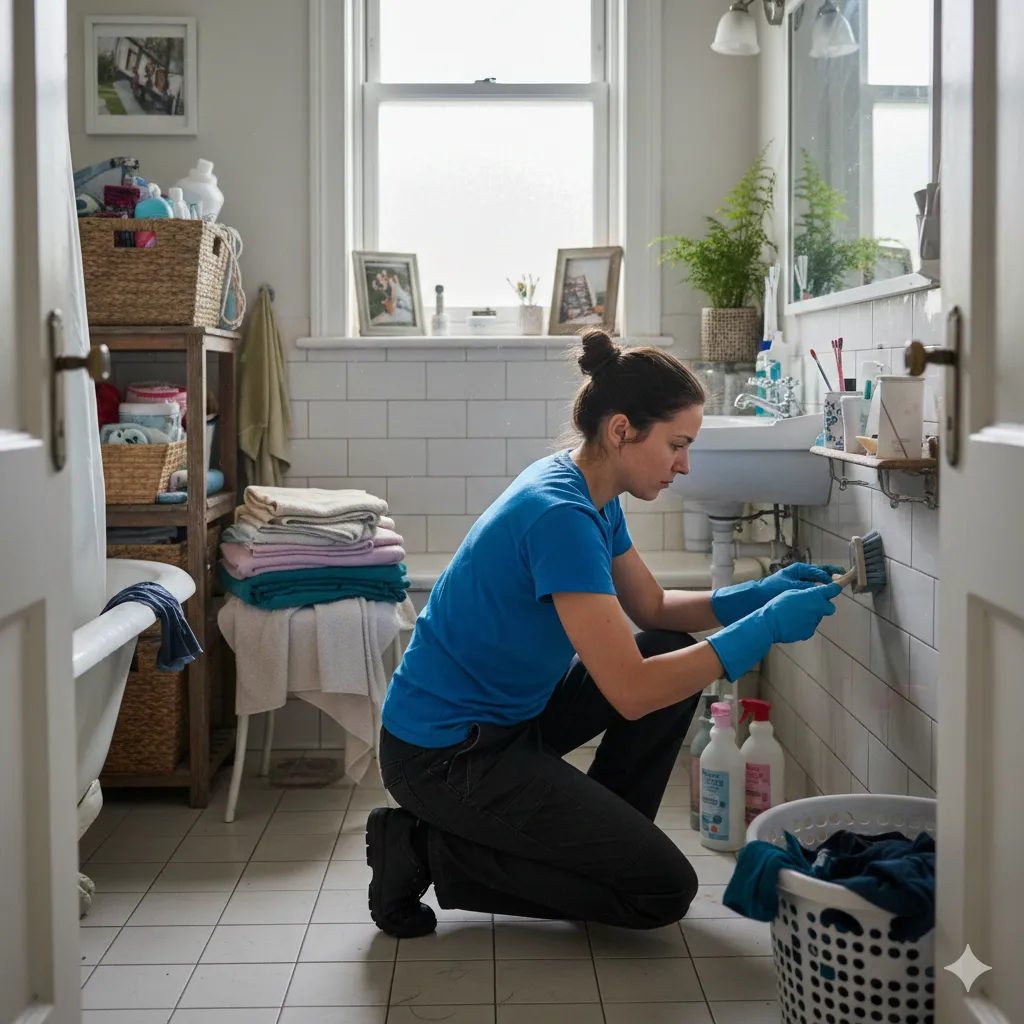
How to Clean a Bathroom Like a Pro: Step-by-Step Guide
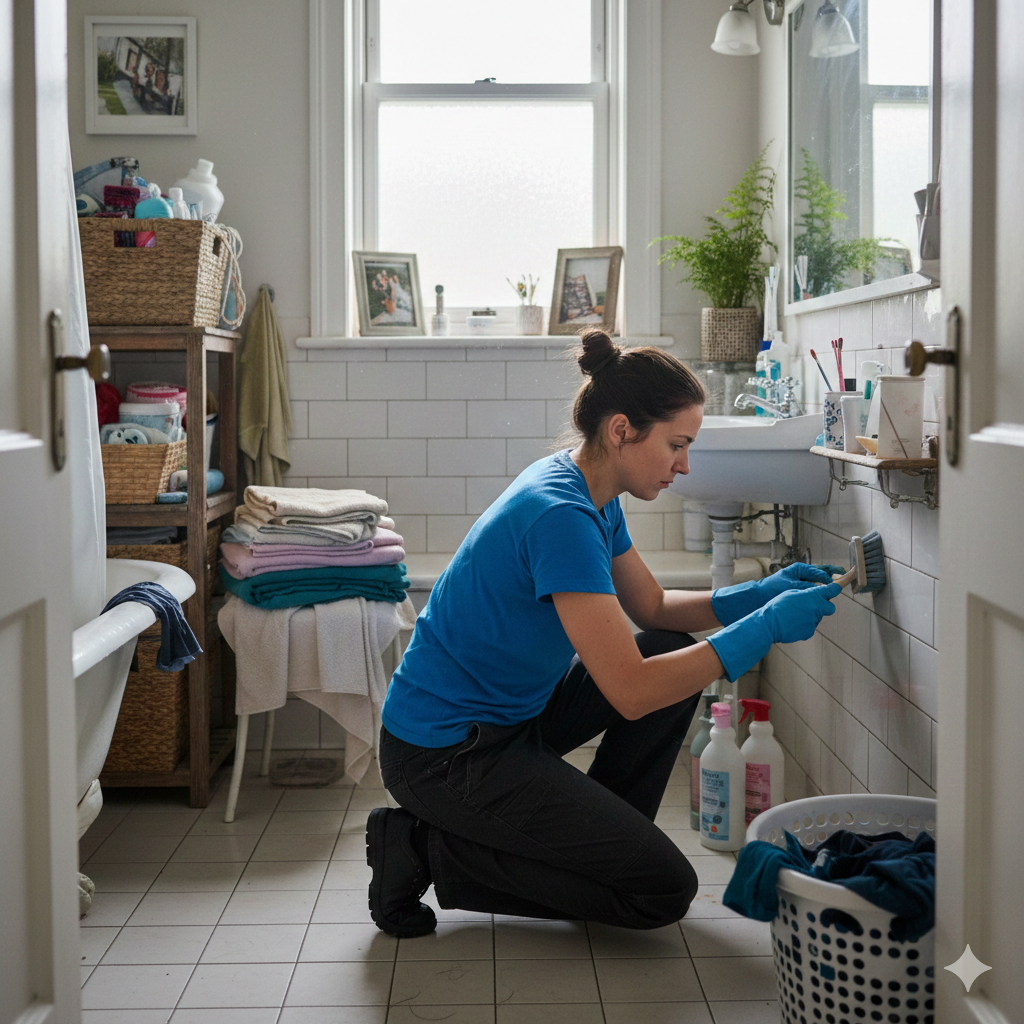
Most people clean a bathroom in whatever order the mess catches their eye, which is why it takes longer than it should and still looks streaky. If you want to know how to clean a bathroom the way professional cleaners do, the secret is not a special product. It is the order of operations, giving your cleaners time to work, and finishing in the right place. This step-by-step guide walks you through a full bathroom clean, plus what to do weekly and monthly to keep it that way.
Before You Start: Supplies and One Safety Rule
Gather everything first so you are not walking back and forth with wet gloves. A basic bathroom kit covers almost every job:
- Rubber gloves and a few microfiber cloths (use separate colors for the toilet and everything else)
- An all-purpose bathroom cleaner and a registered disinfectant
- A toilet bowl cleaner and toilet brush
- Glass cleaner or a squeegee
- A grout brush or old toothbrush and a non-scratch scrub pad
- A vacuum or broom, and a mop or floor cloth
The safety rule: never mix bleach with ammonia or with acids. Bleach plus ammonia releases toxic chloramine gas, and bleach plus acids (including vinegar and many toilet bowl and lime-scale cleaners) releases chlorine gas. Use one product at a time, rinse between products, keep the room ventilated with the fan on or a window open, and always read the label.
How to Clean a Bathroom Step by Step
Professionals follow two simple principles: work top to bottom so dust and drips fall onto areas you have not cleaned yet, and work cleanest to dirtiest so you never drag toilet germs onto the sink.
Want to know what this would cost for your home? Get your instant price in about two minutes. No phone call needed.
Step 1: Clear out and dust
Remove bath mats, towels, the trash can and everything sitting on the counter, tub ledge and toilet tank. Shake out or toss the mats in the wash. Then dry-dust from the top down: the exhaust fan cover, light fixture, top of the mirror, shelves and the top of the door frame. Dusting before you spray keeps you from turning dust into mud.
Step 2: Apply cleaners and let them dwell
This is the step most people skip. Squirt toilet bowl cleaner under the rim, and spray the tub, shower walls and sink with your bathroom cleaner. Then walk away and do something else. Cleaners need contact time to loosen soap scum and grime, which means far less scrubbing later.
Disinfectants work the same way, only stricter. Every disinfectant label lists a contact time (often called dwell time), and the surface has to stay visibly wet for that full time to kill the germs listed on the label. Wiping it off after a few seconds just cleans the surface; it does not disinfect it. Also remember that disinfectants work best on a surface that has already been cleaned, so clean first, then disinfect high-touch spots.
Step 3: Glass and mirrors
While the tub and toilet soak, clean the mirror. Spray the cloth rather than the mirror to avoid drips running behind the frame, wipe in an S pattern from top to bottom, and finish with a dry microfiber cloth for a streak-free shine. For glass shower doors, a squeegee after cleaning leaves the clearest result.
Step 4: Vanity, sink and fixtures
Wipe the counter, then scrub the sink basin and drain area. Pay attention to the base of the faucet and the handles, where grime and water spots build up. Polish faucets and other chrome or nickel fixtures with a dry cloth so they shine instead of spotting. Finish with cabinet fronts, drawer pulls, light switches and the door handle.
Step 5: Tub and shower
By now your cleaner has had time to work. Scrub the walls from top to bottom, then the tub or shower floor, and rinse thoroughly. Wipe the showerhead and the handles. In the Triangle's humid summers, bathrooms stay damp longer, so check caulk lines and corners for early signs of mildew while you are here. For anything beyond light spotting, our guide to removing mold and mildew from your shower covers it in detail.
Step 6: Grout
Grout is porous, so it holds onto soap residue and stains. Scrub lines with a grout brush and your bathroom cleaner, working in short sections, then rinse. Avoid acidic cleaners and vinegar on natural stone like marble or travertine, since acids can etch the surface; use a cleaner labeled safe for stone. Sealed grout stays clean far longer, so if water darkens your grout right away, it may be time to reseal.
Step 7: The toilet, last
The toilet comes last because it is the dirtiest fixture. Scrub the bowl, including under the rim, and flush. Then, with a dedicated cloth, wipe the outside from top to bottom: the tank lid and handle, the tank, the top of the seat, under the seat, the rim, and finally the base and the floor behind it. That bolt-cap area at the base is where odors hide.
Step 8: Floors, toward the door
Vacuum or sweep first to pick up hair and dust, especially along baseboards and behind the toilet. Then mop or hand-wipe the floor, starting in the far corner and working toward the door so you do not step on your clean floor. Put back the dry mats, fresh towels and an emptied trash can.
Weekly vs. Monthly Bathroom Cleaning Tasks
A full clean like the one above does not need to happen every day. Splitting the work keeps the bathroom fresh with less effort.
Weekly
- Clean and disinfect the toilet, sink and counter
- Clean the mirror and polish fixtures
- Scrub the tub and shower
- Vacuum and mop the floor
- Swap towels and bath mats, and empty the trash
Monthly
- Scrub grout lines and check caulk
- Wash the shower curtain liner, or replace it if it is stained
- Dust the exhaust fan cover and light fixtures
- Wipe baseboards, the door and door frame
- Clear out the vanity and medicine cabinet and wipe the shelves
- Descale the showerhead if you see mineral buildup
Daily habits that help
- Run the exhaust fan during showers and for a while afterward
- Squeegee the shower walls or glass after use
- Hang towels to dry fully instead of leaving them bunched
If you want to see where bathroom germs fit into the rest of the house, read our post on the hidden germs in your home.
How DJM Can Help
Bathrooms are usually the room people dread most, and they are one of the first things our teams take off your plate. With Perfect Maintenance recurring cleaning, the same background-checked, insured team cleans your bathrooms on a weekly, bi-weekly or monthly schedule, with a notes file that remembers your preferences. If your bathrooms need a full reset first, our Top to Bottom Deluxe deep clean gets into the build-up. DJM is a veteran-owned, family-run company serving Raleigh, Durham, Cary, Apex and the surrounding Triangle since 2016. Not sure how often you need help? See how often to schedule professional house cleaning.
Frequently Asked Questions
What order should you clean a bathroom in?
Clear and dust first, apply cleaners so they can dwell, then clean the mirror, the vanity and sink, the tub and shower, and the toilet last. Finish with the floor, working toward the door.
How long should disinfectant sit before wiping?
Follow the contact time on your product's label. It varies by product, and the surface needs to stay visibly wet for that whole time for the product to disinfect as labeled.
How often should a bathroom be cleaned?
Most households do well with a full clean once a week, plus quick daily habits. Bathrooms used by several people, kids or guests may need the toilet and sink wiped more often.
Can I use bleach and vinegar together to get a bathroom cleaner?
No. Mixing bleach with vinegar or other acids releases chlorine gas, and mixing it with ammonia releases chloramine gas. Use one product at a time and rinse in between.
Ready to stop scrubbing bathrooms every weekend? Get your instant price or call (919) 794-5381.
